Internal · for the keynote prep
A change of epochs — not a time of changes
Two things we're speaking to. First — what Ukraine is actually giving the world right now, read mainly through Archbishop Borys Gudziak, with the historian Yaroslav Hrytsak and the dissident Myroslav Marynovych alongside. Second — how Pope Leo XIV, in his first encyclical, reads the same moment: a world order coming loose from the rule of law. Different vocabularies, one diagnosis.
Ukraine is “an epicenter of global change.”
“The birth of a new world is bound up with Ukraine.”
This age is “a time not of despair, but of hope.”
“We are living through… a ‘change of era.’”
Part one
What Ukraine offers the world
Not what Ukraine needs — what it contributes. The throughline across these three is that the war has made Ukraine a place where the world re-learns things it had grown vague about: truth, dignity, the cost of freedom. Gudziak carries the argument; Hrytsak gives it the historian's frame; Marynovych, the conscience.
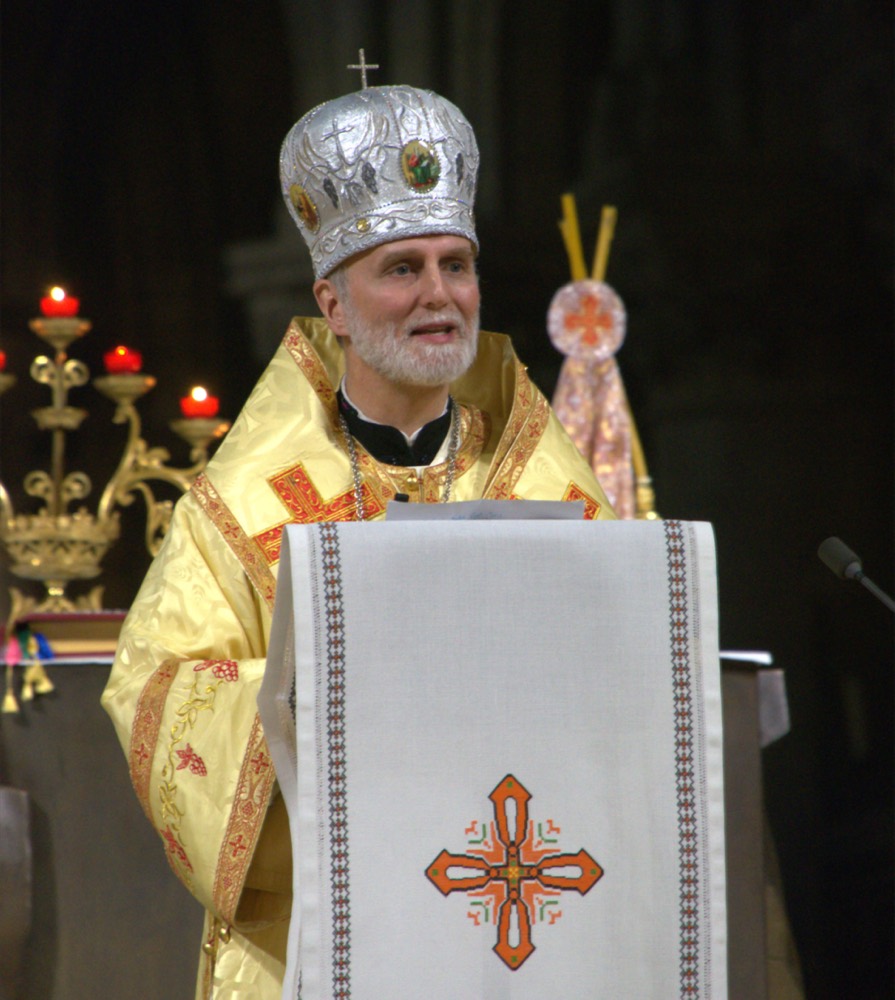
Gudziak's thesis: Ukraine is “an epicenter of global change” — a place where, amid suffering, a paschal witness is lived out for the whole world. Ukrainians defend not just their sovereignty but the dignity, democracy, and rule of law of the entire West, at an inestimable cost. Against relativism — what Benedict XVI called the “dictatorship of subjectivity” — Ukraine insists that truth and good are real and worth dying for, and so it “makes the world think.” The open question is prophetic: will the prophets be heard?
Ukraine as an epicenter
What happens in Ukraine has global impact — a small nation carrying the weight of a whole world order.
“I believe it's an epicenter of global change, and what happens in Ukraine has global impact.”
«Бог дає силу і Україна стоїть. Це чудо і це міняє світ.»
God gives strength and Ukraine stands. This is a miracle — and it changes the world.
Calling things by their name
Amid 20 wars, the world watches Ukraine because Ukrainians refuse relativism — naming good and absolute evil, and willing to die for it.
«У світі йде 20 воєн… люди звертають увагу на Україну, бо українці називають речі своїми іменами: це є добро, а це є абсолютне зло… я готовий за це життя віддати.»
There are twenty wars in the world… people pay attention to Ukraine because Ukrainians call things by their names: this is good, and this is absolute evil — and not as a theory; I am ready to give my life for it.
“There is truth and there are lies. There is good and there is evil. And I am willing to risk my life to affirm the good… Even if I die, I will not fail.”
A prophetic witness
Ukraine's struggle is a prophetic defense of God-given dignity, paid in body and blood.
“What is happening here is prophetic. The question is — will the prophets be heard?”
“People in Ukraine are risking and giving their lives to defend democracy, religious freedom, freedom of the press, God-given human dignity — not only of Ukrainians but of Europeans and people at large.”
Ukraine makes the world think
By living the cost of truth, Ukraine compels the thinking world to confront where it is going — and, Gudziak is convinced, truth prevails.
“Ukraine today is fighting for the freedom of the global world.”
«А Україна заставляє всіх, принаймні мислячих, думати… ви змушуєте світ думати. І я переконаний, що правда переможе.»
Ukraine compels everyone — at least those who think — to think… you are making the world think. And I am convinced that truth will prevail.
«Ще світ ніколи не був таким українським… І спричинювали це катастрофи… Після Христа буде воскресіння.»
Never before has the world been so Ukrainian… and it was catastrophes that brought this about… After Christ, there is resurrection.
«Найпотужніше світло — любов. Любов нас преображає.»
The most powerful light is love. Love transforms us.
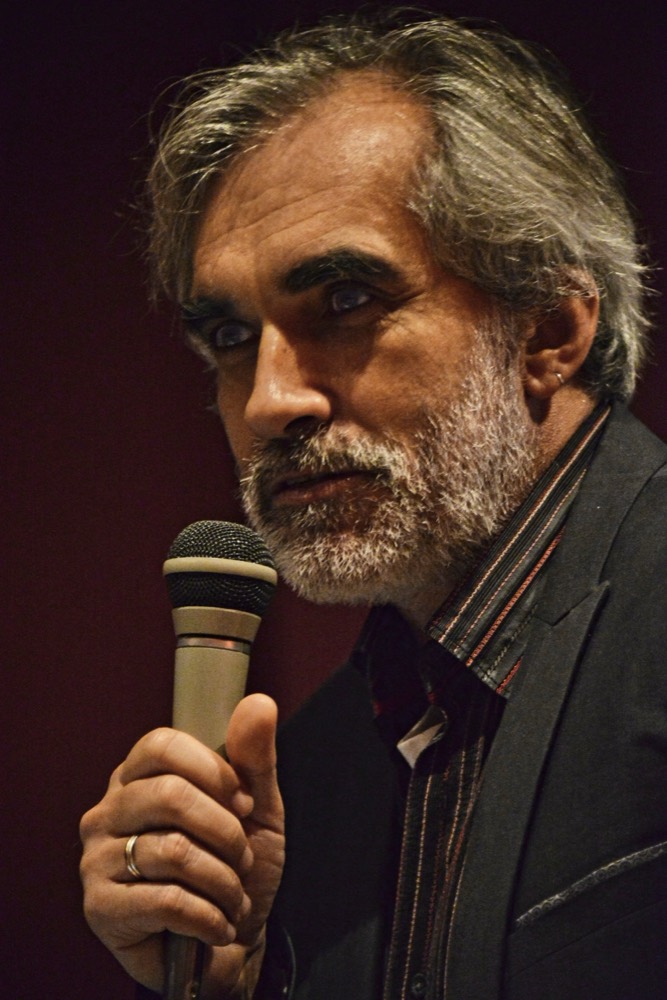
Hrytsak reads the war as a hinge of global history, not a border dispute. The Revolution of Dignity, he argues, was part of a worldwide revolutionary wave of the 2010s, and this war is its “final match” — with the contours of the future world riding on the outcome. A new world is being born in violence and is “bound up with Ukraine,” whose survival against all odds is, in his words, a miracle. From that he draws the claim that Ukraine — and its civic nationalism — is the crisis Europe needed, and Europe's hope.
It is a miracle
Ukraine's survival against all odds defies rational explanation — the same register of awe Gudziak uses.
“Ukraine still stands, against all odds. It's a miracle. There is no rational explanation.”
Ukraine as Europe's hope
Not Europe's burden but its rescue — the jolt a complacent Europe needed, shifting the continent's centre eastward.
“Europe desperately needs a new crisis in order to become viable. The Ukrainian war is the crisis that Europe needed.”
“We must talk about Ukrainian civic nationalism as something very positive — as hope for the future of Europe.”
«Хотілося б думати, що Україна буде новим центральноєвропейським тигром… перенесення центру Європи з заходу на схід, утворення лінії Київ–Варшава, плюс, можливо, Берлін.»
I'd like to think Ukraine will be a new Central European tiger… the centre of Europe shifting from west to east, a Kyiv–Warsaw line — plus, perhaps, Berlin.
A new world is being born
The war is the final match of a global revolutionary wave; the future's shape rides on who wins.
«Світ народжується в муках, у насильстві. Зараз народження нового світу повʼязане з Україною.»
The world is born in agony, in violence. Right now the birth of a new world is bound up with Ukraine.
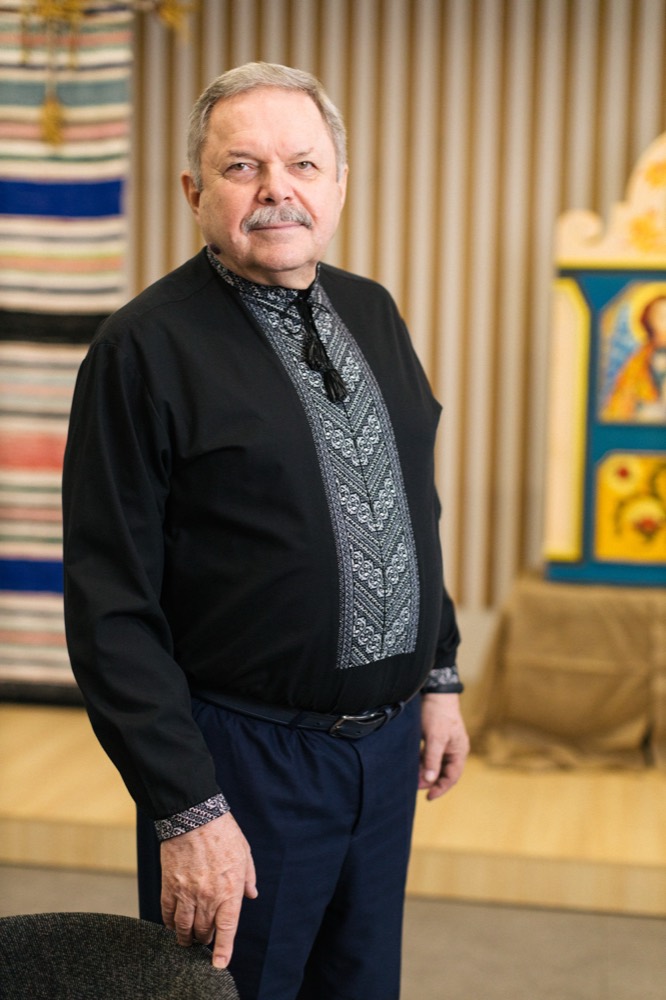
Marynovych speaks as a survivor's conscience — a founder of the 1976 Ukrainian Helsinki Group who served seven years in the Perm-36 camp and five in exile. His thesis: dignity and freedom are not entitlements but responsibilities, held to even when they threaten one's security; the war, for all its blood and pain, is also a “chance” — a moral reordering in which the answers the world needs are ripening precisely where evil attacks hardest. Real reconciliation, he insists, requires not impunity but truth and repentance.
War is also a chance
Blood and pain are real, but every crisis opens chances to discern and seize — so this is an age of hope, not despair.
«Війна без крові і болю неможлива, але до цих двох очевидних слів я би додав несподіване слово — „шанс“… не тільки бачити кров і біль, а й шанси, які перед нами відкриваються.»
War without blood and pain is impossible — but to those two obvious words I'd add an unexpected one: “chance.” Our task is to see not only the blood and the pain, but the chances opening before us.
Dignity as responsibility
Freedom and dignity are duties, not entitlements — hold to your values even when it endangers your security.
«Гідність і свобода — це відповідальність.»
Dignity and freedom are responsibility.
«Тримаймося цінностей, навіть якщо це загрожує нашій безпеці.»
Let us hold to our values — even when it threatens our security.
A peace that doesn't reward aggression
Reconciliation needs truth and repentance, not impunity — no democracy or Church can bless a peace that lets aggression succeed.
“Neither the world's democracies nor the Church can approve of a peace that would make aggression a successful method of appropriating foreign territories.”
Part two
The encyclical on the changing order
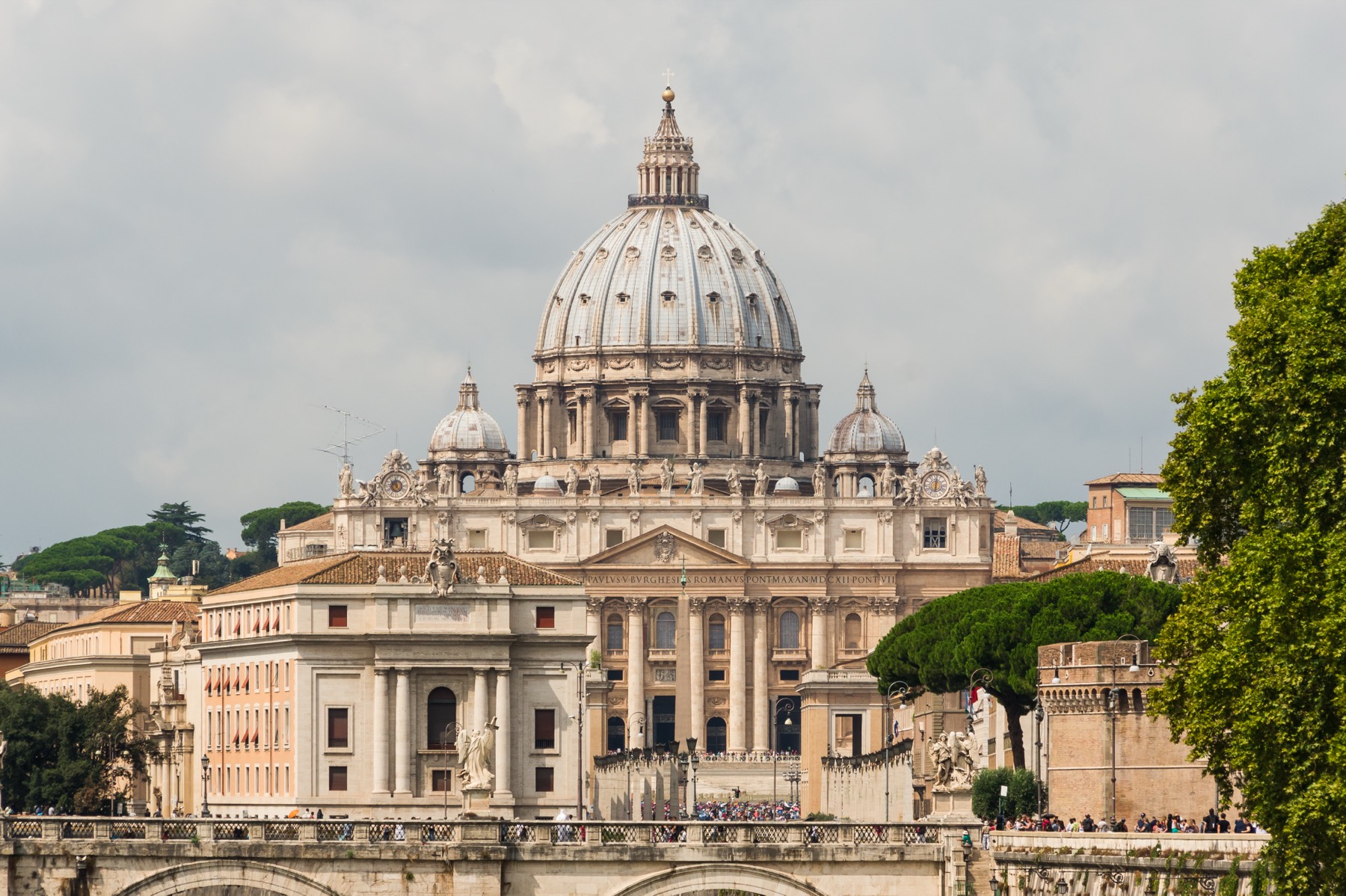
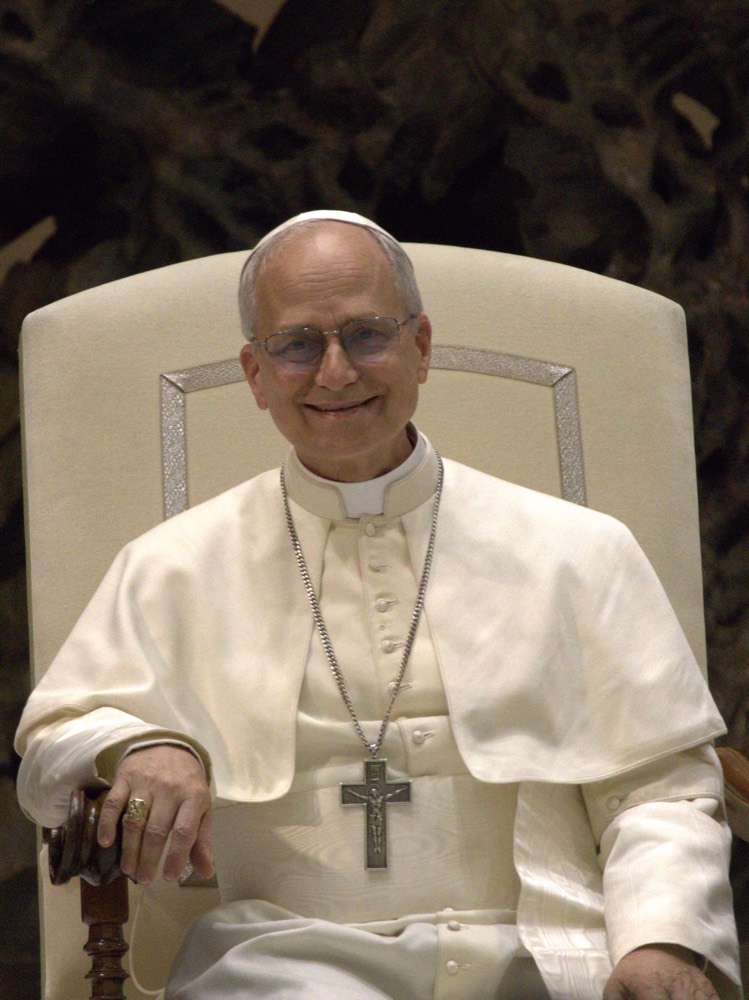
Pope Leo XIV's first encyclical, Magnifica Humanitas (15 May 2026), was signed on the 135th anniversary of Leo XIII's Rerum Novarum — placing it deliberately in the lineage of Catholic social teaching. Its surface subject is artificial intelligence and the predominantly private power now shaping the world. But Chapter Five — “The Culture of Power and the Civilization of Love” — turns from the algorithm to the international order itself: a world drifting from law toward force, from cooperation toward a “disorderly and conflict-ridden multipolarism,” in what Leo calls a change of era.
The world order
The 20th-century promise of multilateral cooperation has decayed into a fractious, mistrustful multipolar world — where subjugating a nation is treated as negotiable.
“The result is a far cry from genuine multilateralism; instead, what has appeared is a disorderly and conflict-ridden multipolarism with a prevailing sense of mistrust.”
“Any attempt or plan to eliminate or subjugate a nation is gravely immoral and therefore unacceptable.”
“…the principle of proportionality in responding to aggression, the protection of access to water, food and essential goods, and respect for the lives of civilians, especially children, come to be regarded as naïve relics of the past.”
The rule of law
When law yields to “might makes right,” the courts meant to judge aggression and war crimes are sidelined — so law must take precedence over interests.
“The force of international law is thus replaced by the claim that ‘might makes right.’ Consequently, tribunals that are competent for settling disputes between States or dealing with war crimes are often weakened or bypassed, with devastating ramifications for political culture and social cohesion.”
“[He warned] against any attempt to base law on utility or force, recalling that an international order governed by the advantage of the strongest exposes weaker peoples to oppression… the need for law to take precedence over interests.”
Governance & authority
Power has shifted to private transnational actors; data, algorithms, and even lethal force cannot be left to a handful of hands — or to machines.
“The main drivers of development are private, often transnational, parties that are endowed with resources and the capacity to intervene that surpass those of many Governments. Technological power thus takes on an unprecedented, predominantly ‘private’ aspect…”
“When it comes to decisions regarding economic flows and digital platforms, as well as the governance of data and algorithms, we cannot allow a handful of actors to dictate these processes on their own; instead, we must build forms of cooperation that respect the various levels of the global community and make them jointly responsible for the common good.”
“It is not permissible to entrust lethal or otherwise irreversible decisions to artificial systems. No algorithm can make war morally acceptable.”
A change of era
Leo names the moment not as ordinary turbulence but an epochal threshold — and asks where humanity means to go.
“We are living through a rapid phase of transition, a ‘change of era’… crucial questions impose themselves on our conscience and can no longer be avoided: Where are we going? Toward what goal do we wish to orient ourselves? What direction should we choose as a people and as a human community?”
“I would like to propose a sober yet demanding program of Christian life with which we can navigate this epochal change in the light of the Gospel.”
Where they rhyme
The same diagnosis, from Lviv and from Rome
This is the move for the keynote: Ukraine isn't a side-story to the encyclical's world-order argument — it's the case study. What Leo names from Rome as a structural drift, the Ukrainian voices name from inside the experience. The encyclical supplies the grammar of the crisis; Ukraine supplies its flesh and its stakes.
“…all the despots in the world will feel they can trample on international law.”
“The force of international law is replaced by ‘might makes right.’”
“Ukraine today is fighting for the freedom of the global world.”
Humanitarian law dismissed as “naïve relics of the past.”
“No peace that makes aggression a successful method of appropriating territory.”
“To eliminate or subjugate a nation is gravely immoral.”
“Dignity and freedom are responsibility” — values over security.
“Law must take precedence over interests.”
“A new world is being born” — “an epicenter of global change.”
“We are living through… a ‘change of era.’”
Sources & provenance
Where this comes from
Built from the collection of speeches and articles compiled by Svitlana Khyliuk (UCU). Quotes are verbatim from the linked sources; the encyclical passages are checked against the official Vatican text. Bilingual items show the Ukrainian original with a working English gloss. Internal prep — not for circulation beyond the team.
Borys Gudziak
- Vatican News — “A living paschal story” (2026)
- Communion & Liberation — “Safeguard your heart” (NY Encounter, 2023)
- OSV News — “Prophetic defense of dignity” (2024)
- The Cipher Brief — “Thanks to America, and a warning” (2024)
- UGCC Synod — “20 wars, but the world watches Ukraine” (2022)
- UCU / LB.ua — “The most powerful light is love” (2026)
Yaroslav Hrytsak
Myroslav Marynovych
Image credits.
Borys Gudziak — photo NickK, CC BY-SA 3.0 ·
Yaroslav Hrytsak — photo Mykola Swarnyk, CC BY-SA 3.0 ·
Myroslav Marynovych — Ukrainian Catholic University, CC BY-SA 4.0 ·
Pope Leo XIV — Edgar Beltrán / The Pillar, CC BY-SA 4.0 ·
St. Peter's Basilica — Jebulon, CC0. All via Wikimedia Commons.
Palette. Notre Dame Blue #0C2340 & Gold #AE9142; UCU maroon #7F1716 & cream #F6F3E5.